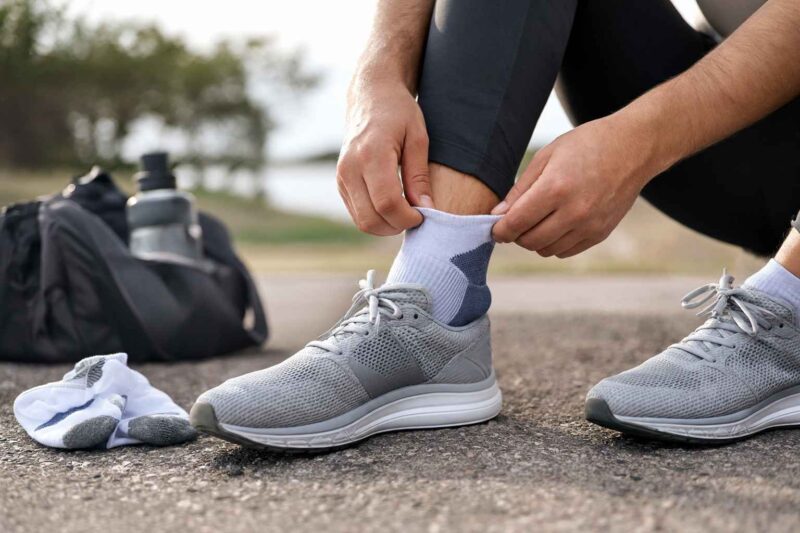
Your running shoes fit perfectly in the store, but halfway through a five-mile run, your heel starts rubbing. By the time you get home, there is a blister forming, and your socks have bunched up beneath your toes.
The problem might not be your shoes. Socks that are too thick, too loose or poorly fitted can cause discomfort even inside a pair of running shoes you normally love.
When choosing workout socks, start with three things. They should fit your feet without wrinkles, manage sweat and leave enough room inside your shoes. Cushioning, compression and grip are additional features worth considering depending on the activity.
1. Choose Socks According to Your Workout, Not Just Your Shoe Size
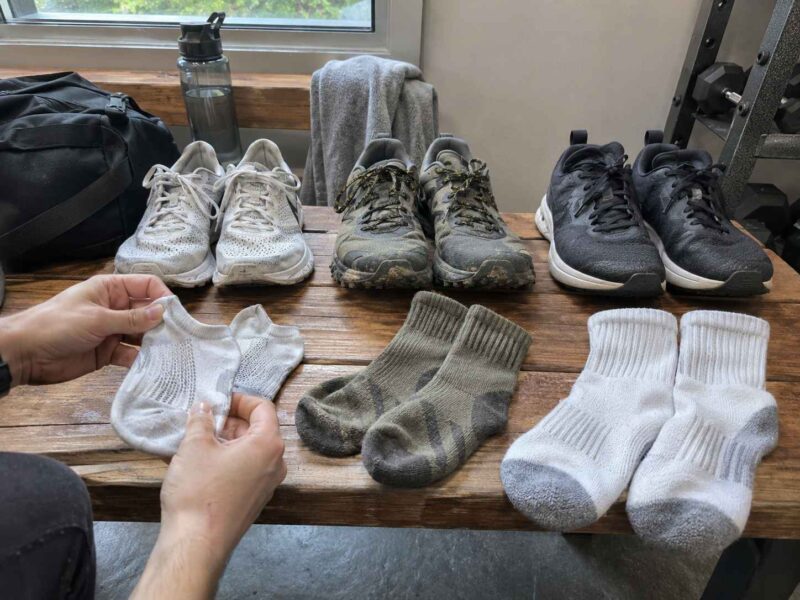
A five-mile road run, a soccer match and a strength training session place different demands on your socks.
During running, your feet repeatedly move forward and backward inside the shoes. The sock needs to stay in position without bunching around the heel or toes. Breathable workout socks with suitable cushioning are usually a sensible starting point.
Soccer involves sprinting, stopping and changing direction. Players may prefer a closer fit and additional grip between the sock and the inside of the cleat. The amount of space inside the cleat is especially important because performance footwear can fit tightly.
For gym training, the choice depends on the exercises.
Lightweight socks may feel comfortable during treadmill running, while socks with a secure fit can be useful during workouts involving repeated changes of direction.
Products such as those offered by Zero Give are designed primarily for soccer, where movement inside the cleat is a particular concern.
Runners considering similar sock features should assess them in their own footwear rather than assuming that a soccer sock will automatically improve their running.
| Activity | Important Features | What to Check |
| Road running | Moisture management, secure fit, comfortable cushioning | No bunching or rubbing during repeated strides |
| Trail running | Close fit, suitable cuff height, durable fabric | Protection against irritation and debris entering the shoe |
| Soccer | Low-bulk construction, secure fit, optional external grip | Enough room inside the cleat |
| Gym training | Breathable material, stable fit, suitable thickness | Comfort during lifting and short cardio sessions |
One pair can work for several activities, but a sock that feels comfortable during a short gym session may become irritating over a long run.
2. Match Sock Thickness to the Space Inside Your Running Shoes
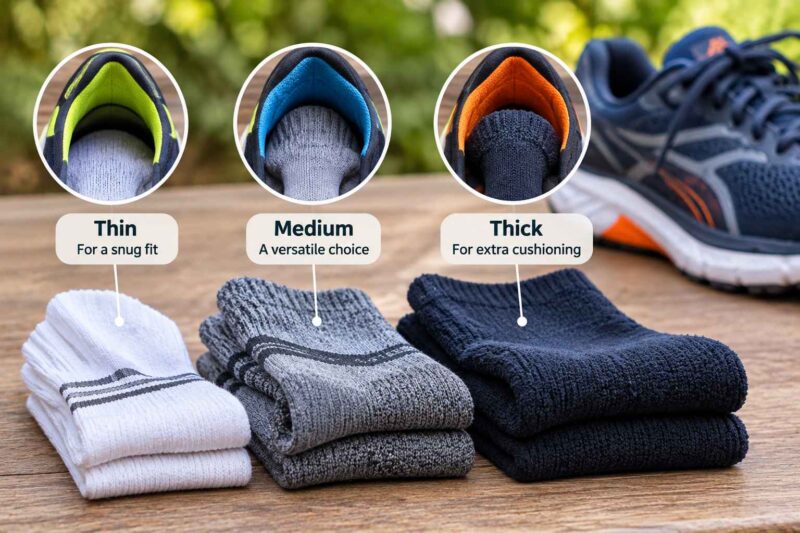
Thick cushioning feels comfortable when you hold a sock in your hand. Inside a snug running shoe, however, that extra material may leave your toes feeling cramped.
Consider how your shoes fit with the socks you already wear.
If the shoes have plenty of room around the forefoot, medium cushioning may feel comfortable. If the toe box already fits closely, lightweight workout socks are worth trying first.
Many running socks place additional padding beneath the heel and forefoot without making the entire sock equally thick. That can provide comfort in areas that contact the insole while keeping the upper foot less bulky.
The American Orthopaedic Society for Sports Medicine identifies suitable sock thickness and proper shoe fit among the considerations for avoiding irritation during running.
Try socks with the exact shoes you plan to use. If you regularly choose between different pairs of running shoes, you may find that a thicker sock works in one pair but feels too tight in another.
3. Look for Socks That Manage Sweat Without Holding Too Much Moisture
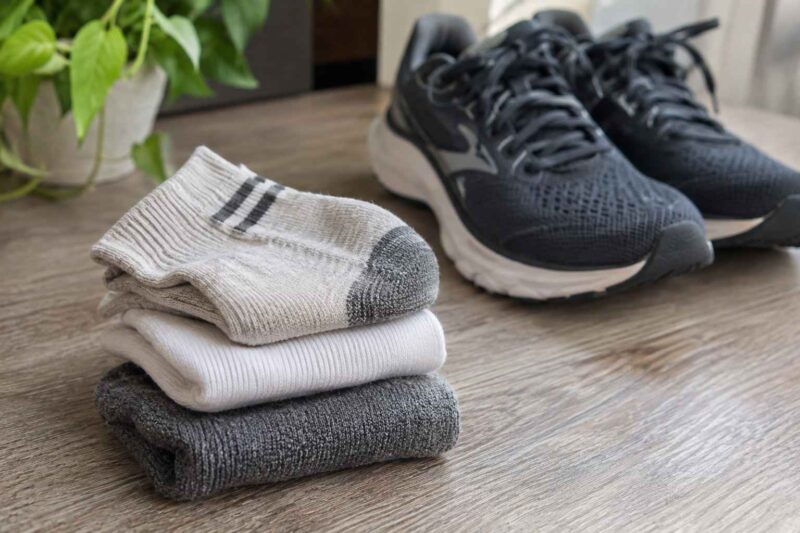
Feet sweat during exercise, even in cold weather. Moisture can leave socks feeling heavy and increase rubbing between the skin, fabric and shoe.
Moisture-wicking socks are designed to move sweat away from the skin through the fabric. Common materials include polyester, nylon and certain technical fiber blends.
Merino wool is another option. It can absorb and release moisture while providing insulation, making it popular for some cold-weather and trail-running socks.
Cotton absorbs moisture and can remain damp during prolonged activity. For runners who sweat heavily or develop blisters, synthetic or wool-blend socks may be more comfortable.
The American Academy of Dermatology recommends nylon or moisture-wicking socks as part of reducing friction that can cause blisters.
However, cotton-free performance socks are not automatically better in every situation. Fabric construction, fit, thickness and the way the material handles sweat all influence comfort.
If your socks become soaked during longer runs, carry a dry spare pair. Changing socks can be more useful than continuing to run with damp fabric rubbing against your skin.
4. Check the Heel, Toe Seam and Overall Fit
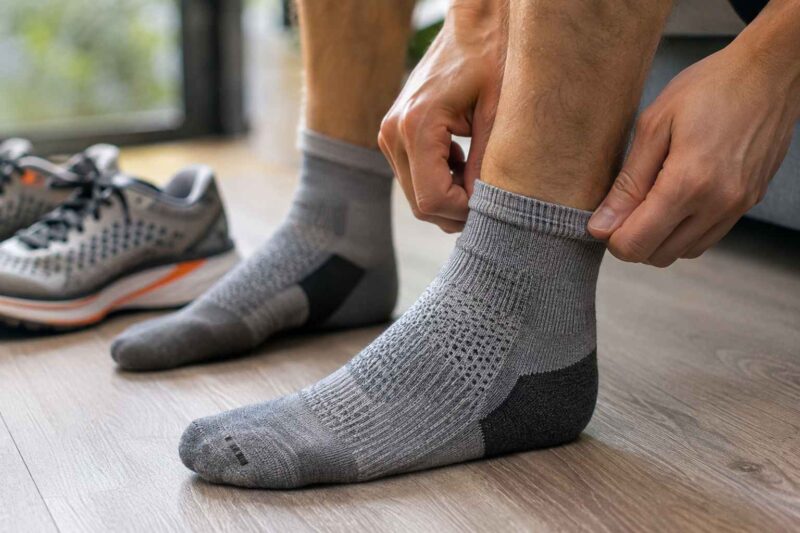
A running sock should stay in place without needing constant adjustment.
Start with the heel. The shaped heel section should sit against your actual heel rather than creeping underneath your foot or stretching toward the ankle.
Next, check the toes. Excess fabric can gather inside the toe box and create uncomfortable folds.
Toe seams also deserve attention. A thick seam positioned directly against the toes may cause irritation during longer sessions.
Some manufacturers use anatomical grip socks with separate right and left construction. The idea is to follow the shape of each foot more closely and keep specific fabric zones aligned.
However, a well-fitted conventional sock can also remain comfortable and secure. Left and right labels are useful design features, not proof that one pair will suit every runner.
For people who regularly develop blisters, the Mayo Clinic recommends properly fitted footwear, moisture-managing socks and attention to areas that repeatedly rub.
5. What Do Grip Socks Actually Do Inside Running Shoes?
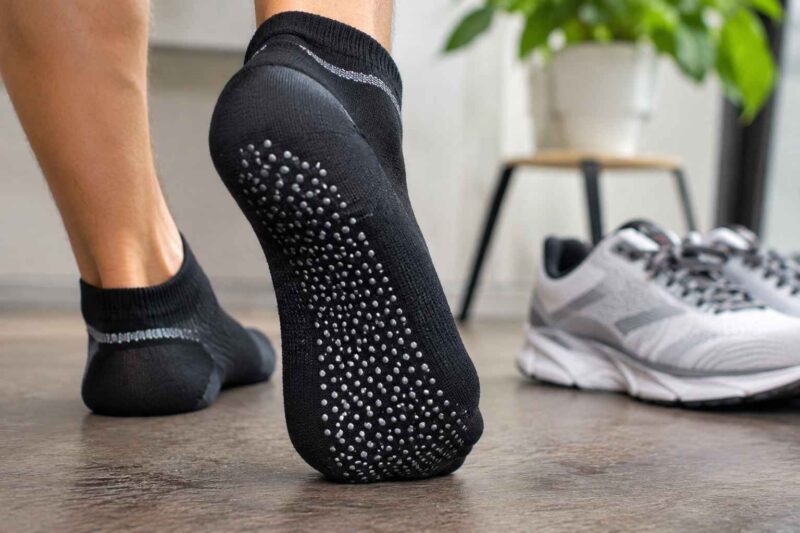
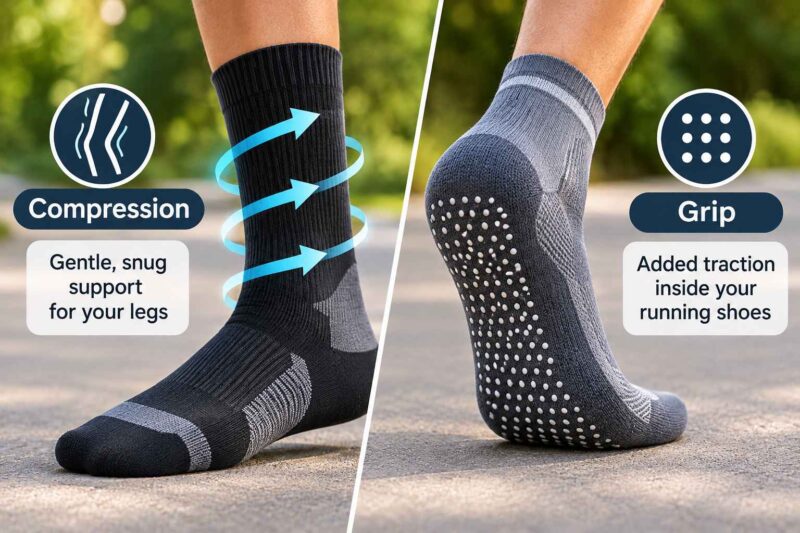
Grip socks have textured material on the outside, usually beneath the foot. The grip is intended to increase contact between the sock and the shoe insole.
Imagine your foot moving slightly forward inside the shoe when you stop suddenly. External grip may help limit some movement at the sock-to-insole contact area.
However, grip socks for running do not create additional traction between the shoe and the ground. That job belongs to the outsole.
For road running, the tread and rubber compound help determine how the shoe grips pavement. Trail shoes use outsole designs suited to loose dirt, mud or rocky surfaces.
The differences between running shoes for road, trail and track surfaces are therefore important when choosing footwear for different conditions.
A grip sock also cannot fix a shoe that is too large, too narrow or poorly shaped for your foot.
If your heel slides considerably inside the shoe, check the shoe fit and lacing before assuming that additional sock grip will solve the problem.
6. Compression and Grip Are Not the Same Feature
Compression socks use elastic fabric to apply pressure around parts of the foot, ankle or lower leg.
Grip socks use external materials or textures to increase contact with the insole.
A sock can include both features, but they serve separate purposes.
For everyday training, mild compression may create a snug feeling that some runners prefer. Others find tighter socks uncomfortable, particularly around the arch or calf.
Compression grip socks should be selected according to their actual fit, not the assumption that tighter fabric will make you run faster.
A sock with graduated compression may have a stated pressure range, measured in millimeters of mercury, or mmHg. That number describes compression, not grip strength or running performance.
If a sock causes numbness, tingling or uncomfortable pressure, remove it and check the sizing.
Frequently Asked Questions
Choose Socks That Work With Your Feet and Shoes
Start with fit, fabric and thickness when buying running socks. Check that the heel stays in place, the toes have enough room and the material does not bunch or remain uncomfortably damp during exercise.
Grip and compression may be useful additional features, particularly for athletes who combine running with soccer or gym training. Neither feature guarantees better performance, and neither replaces correctly fitted footwear.
Before spending more on specialised socks, try them during an ordinary workout. A pair that feels comfortable after several miles in your own running shoes is a more useful purchase than one with an impressive feature list that never feels quite right.